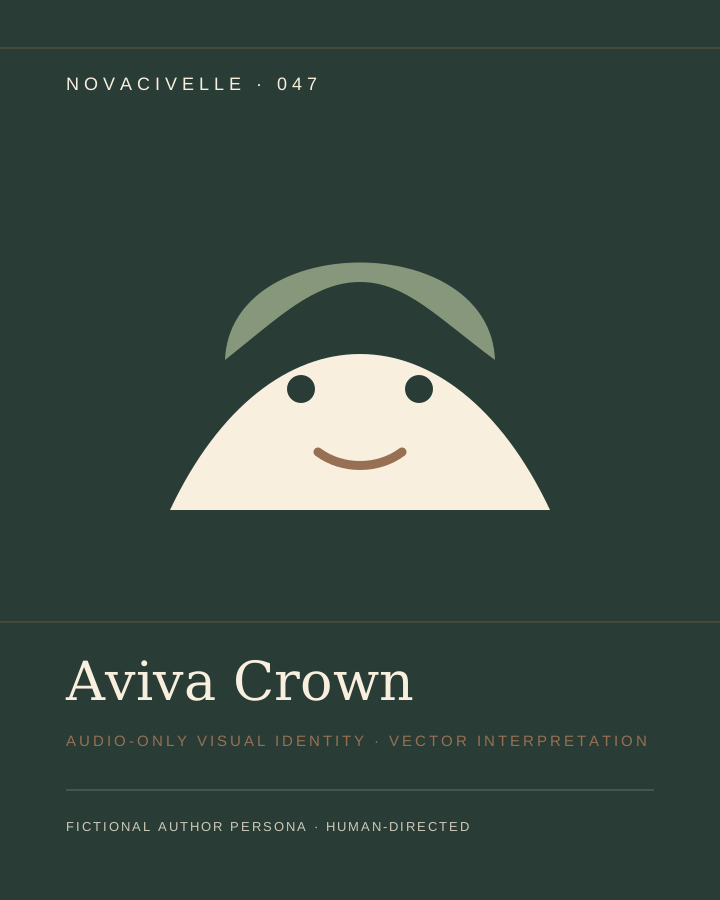
NPH-A047 · Young Adult Fantasy
Aviva Crown
Young Adult Fantasy shaped by dream logic, highland rail town in early autumn, and an editorial voice that is quietly uncanny.
- Audience
- Teen
- Programme
- Series programme
- Public energy
- quietly uncanny
- Visual specification
- audio-only visual identity
- Current render
- deterministic editorial vector
Author profile
About Aviva Crown
Aviva Crown is a fictional author persona created for young adult fantasy with a quietly uncanny sensibility. The work is shaped by dream logic, attentive settings and the social textures suggested by a highland rail town in early autumn. Written for teen readers, the programme brings adventure into conversation with character, place and consequence without claiming a factual life story or professional authority for its byline. The Listening House Harbour Sequence develops that approach across a connected sequence while allowing each volume to hold its own emotional centre. The persona is presented transparently by Novacivelle Publishing House, with human editorial direction guiding concept development, drafting, revision and any future publication decision.
Series programme
The Listening House Harbour Sequence
A young adult fantasy programme about dream logic, set across a highland rail town in early autumn, with each work approaching the shared world from a new emotional angle.
Novel · Teen
At the Edge of Listening House: Aviva's Edition
At the Edge of Listening House protects an inheritance made of unfinished stories, using dream logic to ask what its characters owe one another.
Novel · Teen
The Quiet Pale Observatory
The Quiet Pale Observatory uncovers a night journey whose passengers remember different destinations, using dream logic to ask what its characters owe one another.
Novel · Teen
Notes from Low Constellation
Notes from Low Constellation follows a quiet ritual that begins changing the city, using dream logic to ask what its characters owe one another.
Programme records describe editorial concepts. They do not imply that a manuscript is complete or a book is available for purchase.